
Home » Food (Page 3)
Category Archives: Food
Eat the Hedgerow! Sat 27th April
Seed Swap for Climate Week
As part of the T.E.T Climate Week we held a seed swap on the 9th March at TAAG. Over recent years it has become illegal to sell seeds that are not on the ‘official’ seed list. This has resulted in many old, unique seeds being lost – partly due to them not being submitted for seed trials, or they were not available at the time. Coupled with this, reinstatement on the list whilst available, requires an annual fee.
To overcome this problem Lawrence Hills set up the national Gene Bank and Heritage Seed Library whereby you can become a member and then be given seeds. Alternatively, there is a growing ground swell of people who are meeting up and exchanging seeds. Indeed, this has become so popular that even ‘Gardener’s Question Time’ recently took place at Brighton’s Seed Swap (play it again online).
So here in Teignmouth it was really good to see so many gardeners bringing their seeds to exchange or taking seeds home for a donation towards the cost of the venue. Tuckers, the seed merchants from Ashburton, had kindly donated many seeds, both vegetable and flower. A short talk was also given about the history of seed saving and ways to be most successful in this satisfying activity. Wonderful refreshments were also enjoyed.
With more than a dozen people we have now started a list of interested people so that we can form a local Teign Estuary Seed Bank. We will then hopefully run a Seedling Swap in the spring and a Food Swap in the autumn besides making the Seed Swap an annual winter event. If you are interested please do send your name and contact details to T.E.T.
Meanwhile, an excellent book to get you going is Back Garden Seed Saving: keeping our vegetable heritage alive by Sue Stickland, or Seedswap: The Gardener’s guide to saving and swapping seeds by Josie Jeffery (a very pretty book).
Submitted by Fran
Climate Week: Bubble & Squeak at the Oystercatcher: Sat 9th/Sun 10th March
 Jan Childs, the Oystercatcher’s new owner, was delighted to support Climate Week this year. Her husband Steve’s famous “Bubble and Squeak for Climate Week” will be the menu special on the weekend of 9th/10th March.
Sourdough talk: Thurs March 7th, 8pm
 As part of Climate Week, Karen will talk on the benefits of Sourdough bread and grains in general. There will be samples to taste and Karen will kindly leave samples for us to cook and enjoy the following day.
The evening is free but we do ask for donations to cover costs.
The event will take place at Fran’s house but numbers are limited so please ring 770318 to reserve your place.
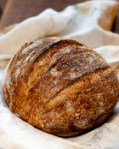
What is sourdough?
Under analysis, sourdough is a polyculture of different yeasts and bacteria which will vary according to the location. Both the yeasts and bacteria contribute to the leavening process.
The yeasts are “wild” in that they are not the commercial yeast usually used to leaven bread. Again, these can vary according to location and rather than being a single species as with regular yeast, are usually 2 or 3 dominant strains, although there can be more yeasts which aren’t really involved with the aeration but are significant nutritionally, such as the torula yeasts.
Nutrition
Sourdough is important nutritionally because through the various types of fermentation, nutrients are released from the grain and new ones are also created. Sourdough bread is actually more nutritious than the grain from which it is made, so it is an important food.
Welcoming visitors
One of our medium term aims was to plant an edible hedge – and we had some raspberry canes given to us a couple of weeks ago. Here we are preparing the ground for them, and putting up some accommodation to encourage visitors.
Winter in the Walled Garden
There have been some quite bright, and cold, Sundays in the garden – and these are some of the routine clearing and planning jobs we’ve been doing
 Teign Estuary Transition